

30 September 2026
Wegovy 7.2 mg Is Now Available in Ireland: The Single-Dose Pen Has Launched (2026)
All medical information is reviewed by our clinical partners at MedicOnline.

Dr. Jahan Khan, CMO @ MedicOnline
IMC 409788
NOW AVAILABLE (September 2026): The Wegovy 7.2 mg single-dose pen has launched in Ireland. One weekly injection at the highest-strength dose - no more three-injection workaround. Eligible patients can be prescribed the pen by their doctor and collect it from, or have it delivered by, their pharmacy.
The Wegovy 7.2 mg single-dose pen has launched in Ireland. From September 2026, eligible patients can access the highest-strength Wegovy dose as one weekly injection - the format most patients expect from a GLP-1 treatment.
This is the meaningful update. When the European Commission approved the 7.2 mg dose in February 2026, the higher strength was only administered as three separate 2.4 mg injections in a single weekly sitting - a workable but clunky interim step while Novo Nordisk awaited approval of the dedicated pen. On 15 July 2026, the EC approved the single-dose 7.2 mg pen. And as of September 2026, that pen is stocked in Irish pharmacies.
For patients, this is what makes 7.2 mg practically accessible. One injection, once a week, at the highest efficacy Wegovy has to offer. At Bua Health, we want to make sure our patients understand exactly what this means, who it is relevant for, and how to access it.
What the STEP UP Trial Actually Showed
The approval is built on two Phase 3b trials published simultaneously in The Lancet Diabetes and Endocrinology in November 2025: STEP UP (adults with obesity without diabetes) and STEP UP T2D (adults with obesity and type 2 diabetes). The primary trial, STEP UP, enrolled 1,407 adults across 95 clinical sites in 11 countries over 72 weeks[3].
The headline result: people on semaglutide 7.2 mg lost an average of 20.7% of their body weight, compared with 17.5% on the standard 2.4 mg dose and 2.4% on placebo[3].
- 20.7% average weight loss with 7.2 mg over 72 weeks
- 31.2% of people on 7.2 mg lost 25% or more of their body weight (15.3% on 2.4 mg, 0% on placebo)
- Approximately 84% of weight lost came from fat mass - with muscle function preserved
The STEP UP data showed that approximately 84% of weight lost at 7.2 mg came from fat mass, with muscle function preserved - supporting the favourable benefit-risk profile the researchers concluded. The threshold of 25% weight loss is clinically meaningful because it approaches outcomes previously only associated with bariatric surgery and Mounjaro 15 mg.
Closing the Gap with Mounjaro
Before 7.2 mg, the direct SURMOUNT-5 trial showed Mounjaro beating Wegovy 2.4 mg: 20.2% average weight loss against 13.7%[4].
Wegovy 7.2 mg changes that picture. At 20.7% in its own trial, the 7.2 mg dose is in the same range as Mounjaro 15 mg, which reached 22.5% in SURMOUNT-1[3][5]. The two have not been tested against each other at these doses. Patients for whom semaglutide is the better fit now have a higher-dose option within the semaglutide class, with semaglutide's heart-outcome data on top[6]. If you're comparing both options in Ireland, see Wegovy vs Mounjaro in Ireland.
Mean weight loss
2.4 mg: 17.5% at 72 weeks, taken as prescribed (15.6% across everyone)
7.2 mg: 20.7% at 72 weeks, taken as prescribed (18.7% across everyone)
25%+ weight loss
2.4 mg: 15.3% of patients
7.2 mg: 31.2% of patients
CV indication
2.4 mg: Yes (SELECT trial, NEJM 2023)
7.2 mg: Same indication (SELECT trial)
Ireland access
2.4 mg: Available now
7.2 mg: Available now (single-dose pen)
Dysesthesia rate
2.4 mg: 6.0%
7.2 mg: 22.9%
One Pen, Once a Week: How the 7.2 mg Dose Is Administered
The Wegovy 7.2 mg dose is delivered in a dedicated single-dose pre-filled pen - one weekly injection, the same format as the lower-strength Wegovy pens. No workaround, no multiple injections.
Eligible patients can step up from the 2.4 mg maintenance dose to 7.2 mg after a minimum of four weeks at the 2.4 mg level, where greater weight loss is clinically indicated. This is not a starting dose and is not appropriate for patients who have not already tolerated the 2.4 mg dose.
The 7.2 mg dose is a step-up option for specific patients - not a replacement for the 2.4 mg dose, which remains the standard maintenance dose for most people. The decision to escalate is a clinical one made with your doctor.
The Ireland Timeline: Where Things Stand
September 2025 - DONE
STEP UP trial results published in The Lancet Diabetes and Endocrinology. Novo Nordisk submits application to EMA.
December 2025 - DONE
EMA CHMP issues positive opinion. UK MHRA approves separately on 12 January 2026.
17 February 2026 - DONE
European Commission formally approves the Wegovy 7.2 mg dose across all 27 EU member states (administered as three 2.4 mg injections in the interim).
15 July 2026 - DONE
European Commission approves the dedicated single-dose 7.2 mg pen.
September 2026 - DONE
The Wegovy 7.2 mg single-dose pen becomes available in Irish pharmacies on private prescription. One weekly injection at the highest-strength dose.
The Wegovy 7.2 mg single-dose pen is now available in Ireland for eligible patients through Bua Health.
Who Is the 7.2 mg Dose Actually For?
The 7.2 mg dose is designed for patients who have reached and tolerated the 2.4 mg maintenance dose but have not achieved their treatment goals - either because weight loss has plateaued or because their clinical objectives require greater reduction than 2.4 mg is delivering. For patients who are responding well to 2.4 mg, there is no clinical reason to escalate.
This is also particularly relevant for patients who previously felt they had to choose between semaglutide and tirzepatide purely on the basis of weight loss. With 7.2 mg reaching a similar level to Mounjaro 15 mg in its own trial, in a single weekly injection, semaglutide's heart-outcome data become the deciding factor for many patients with heart disease[6].
Looking to get started or switch provider?
Finding the right path for your health is a significant decision, but you don't have to navigate it alone. At Bua Health, the process is simple, secure, and strictly doctor-led:
Complete our secure online assessment to share your medical history and goals.
Have your case reviewed by an IMC-registered doctor from our clinical partners at MedicOnline.
Agree a personalised treatment plan - and stay informed as new dose options become available in Ireland.
Our clinical partners at MedicOnline are ready to review your history and help you build a holistic plan that works for your life, not just your weight.
You can check your eligibility online at buahealth.ie in minutes.
Frequently Asked Questions
Related reading: Wegovy vs Mounjaro in Ireland and Do I Qualify for Wegovy in Ireland?.
References
- 1.Novo Nordisk. European Commission approves the 7.2 mg once-weekly dose of Wegovy. Press release, 17 February 2026.The 7.2 mg dose was first approved as three 2.4 mg injections. The single-dose 7.2 mg pen was approved separately on 15 July 2026.
- 2.Novo Nordisk. European Commission approves the Wegovy pill; single ready-to-use pen for the 7.2 mg dose also approved. Press release, 15 July 2026.
- 3.Wharton S, et al. Once-weekly semaglutide 7.2 mg in adults with obesity (STEP UP). Lancet Diabetes Endocrinol 2025;13:949-963.Semaglutide 7.2 mg, 2.4 mg and placebo over 72 weeks in 1,407 adults with a BMI of 30 or more, without diabetes, alongside diet and exercise changes. Weight change when taken as prescribed: 20.7% on 7.2 mg, 17.5% on 2.4 mg, 2.4% on placebo. Across everyone in the trial, including those who stopped: 18.7%, 15.6% and 3.9%. Lost 25% or more of their body weight: 31.2% on 7.2 mg, 15.3% on 2.4 mg, 0% on placebo. The 2.4 mg group was small (201 people). As-prescribed and responder figures are from the Wegovy EU product information, section 5.1. STEP UP did not include tirzepatide; its figures cannot be compared directly with SURMOUNT-1 or SURMOUNT-5.
- 4.Aronne LJ, et al. Tirzepatide as compared with semaglutide for the treatment of obesity (SURMOUNT-5). N Engl J Med 2025;393:26-36.Direct comparison over 72 weeks in 751 adults with obesity, or overweight with a weight-related condition, without diabetes. Open-label: participants and doctors knew which medicine was given. Each medicine was given at its highest tolerated dose: tirzepatide 15 mg (10 mg if not tolerated) or semaglutide 2.4 mg (1.7 mg if not tolerated). Weight change: 20.2% on tirzepatide, 13.7% on semaglutide (difference 6.5 points). Semaglutide 7.2 mg was not part of this trial.
- 5.Jastreboff AM, et al. Tirzepatide once weekly for the treatment of obesity (SURMOUNT-1). N Engl J Med 2022;387:205-216.Tirzepatide 5 mg, 10 mg, 15 mg and placebo over 72 weeks in 2,539 adults with a BMI of 30 or more, or 27 or more with a weight-related condition, without diabetes, alongside diet and exercise changes. Weight change when taken as prescribed: 16.0%, 21.4% and 22.5%; placebo 2.4% (Mounjaro EU product information, section 5.1). Across everyone in the trial, including those who stopped: 15.0%, 19.5% and 20.9%; placebo 3.1%. SURMOUNT-1 did not include semaglutide; its figures cannot be compared directly with STEP UP.
- 6.Lincoff AM, et al. Semaglutide and cardiovascular outcomes in obesity without diabetes (SELECT). N Engl J Med 2023;389:2221-2232.Semaglutide 2.4 mg weekly against placebo in 17,604 adults aged 45 or older with existing cardiovascular disease and a BMI of 27 or more, without diabetes, followed for 39.8 months on average. Heart attack, stroke or death from a cardiovascular cause: 6.5% on semaglutide, 8.0% on placebo (hazard ratio 0.80, 95% CI 0.72 to 0.90). Tirzepatide has no equivalent published cardiovascular outcome trial yet.
- 7.European Medicines Agency. Wegovy (semaglutide): EU product information.Dosing and step-up rules (section 4.2), side effects (section 4.8) and trial results (section 5.1).
Related Blogs
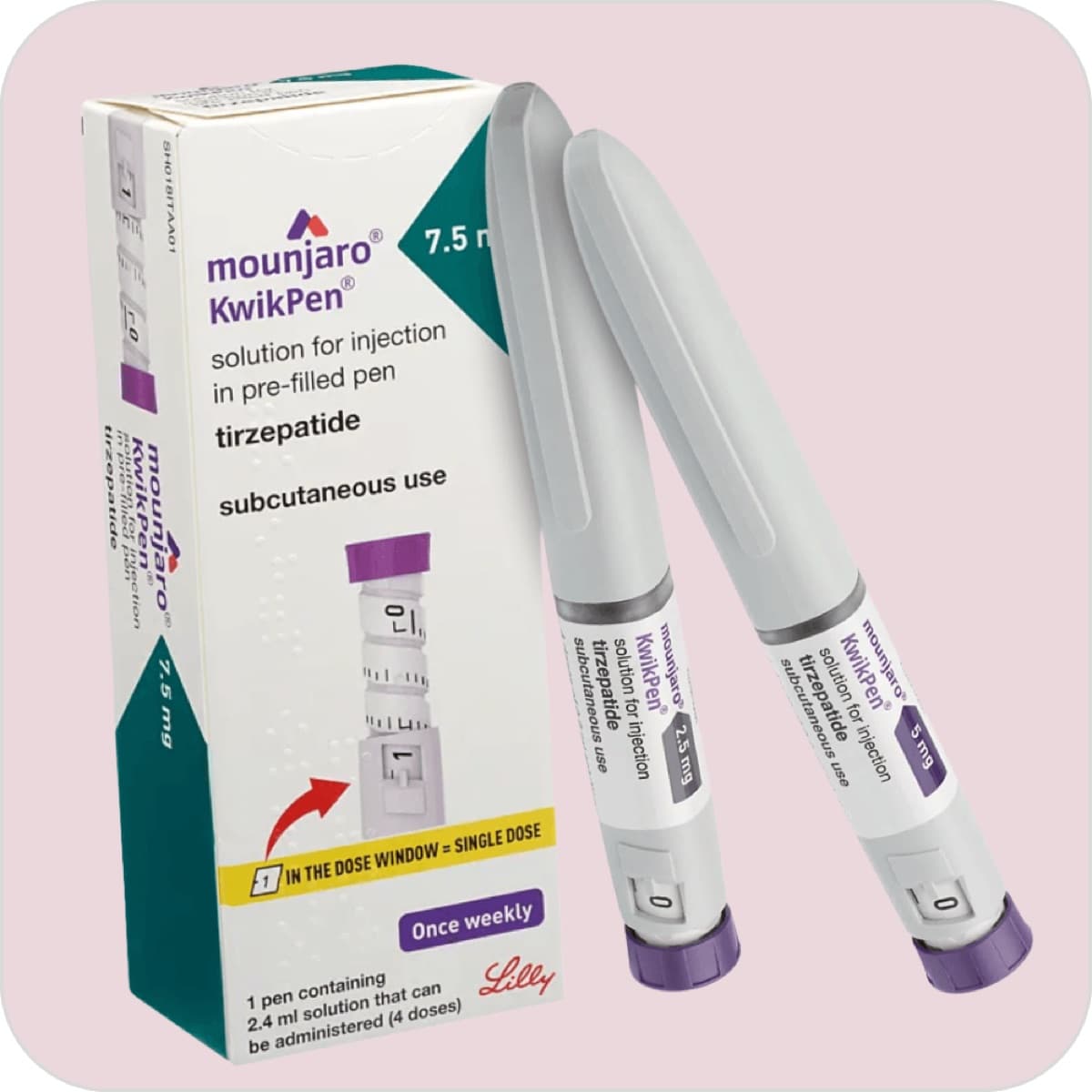
Who Qualifies for Mounjaro in Ireland?
An overview of the clinical criteria, safety checks, and medical assessment process doctors use to decide who is eligible for Mounjaro® (tirzepatide) in Ireland.
Read
What weight loss injections are available in Ireland?
A clear breakdown of the three main medical treatments for weight management in Ireland in 2025 and 2026
Read
Who can't take Mounjaro? Understanding the contraindications
A comprehensive guide to the absolute contraindications and other cautions that determine who cannot safely take Mounjaro® (tirzepatide) in Ireland.
ReadWho Qualifies for Mounjaro in Ireland?
An overview of the clinical criteria, safety checks, and medical assessment process doctors use to decide who is eligible for Mounjaro® (tirzepatide) in Ireland.
What weight loss injections are available in Ireland?
A clear breakdown of the three main medical treatments for weight management in Ireland in 2025 and 2026
Who can't take Mounjaro? Understanding the contraindications
A comprehensive guide to the absolute contraindications and other cautions that determine who cannot safely take Mounjaro® (tirzepatide) in Ireland.