



10 Jul 2026
Menopause and Weight Gain in Ireland: Can GLP-1 Medications Help?
All medical information is reviewed by our clinical partners at MedicOnline.

Dr. Jahan Khan, CMO @ MedicOnline
IMC 409788
You used to know how your body worked. You knew which foods made you gain weight and which ones did not. You knew how hard to train to stay in shape. You had a system, and it worked - maybe not perfectly, but well enough.
Then something shifted. The weight started creeping on, mostly around your middle. The same meals that kept you steady for years were suddenly adding kilos. Exercise helped less, sleep got worse, and nobody could give you a clear answer about why.
If this sounds familiar, and you are a woman somewhere between your early 40s and late 50s, the answer is almost certainly hormonal. Perimenopause and menopause change how your body stores fat, processes food, and responds to the things that used to work. It is not in your head. It is in your biology.
The question is whether the new generation of weight loss medications - Mounjaro and Wegovy - can help. For many women who meet the clinical criteria, the evidence suggests they can.
What Menopause Actually Does to Your Weight
The relationship between menopause and weight gain is not as simple as "your metabolism slows down," though that is part of it. Several things happen at once, and they compound each other.
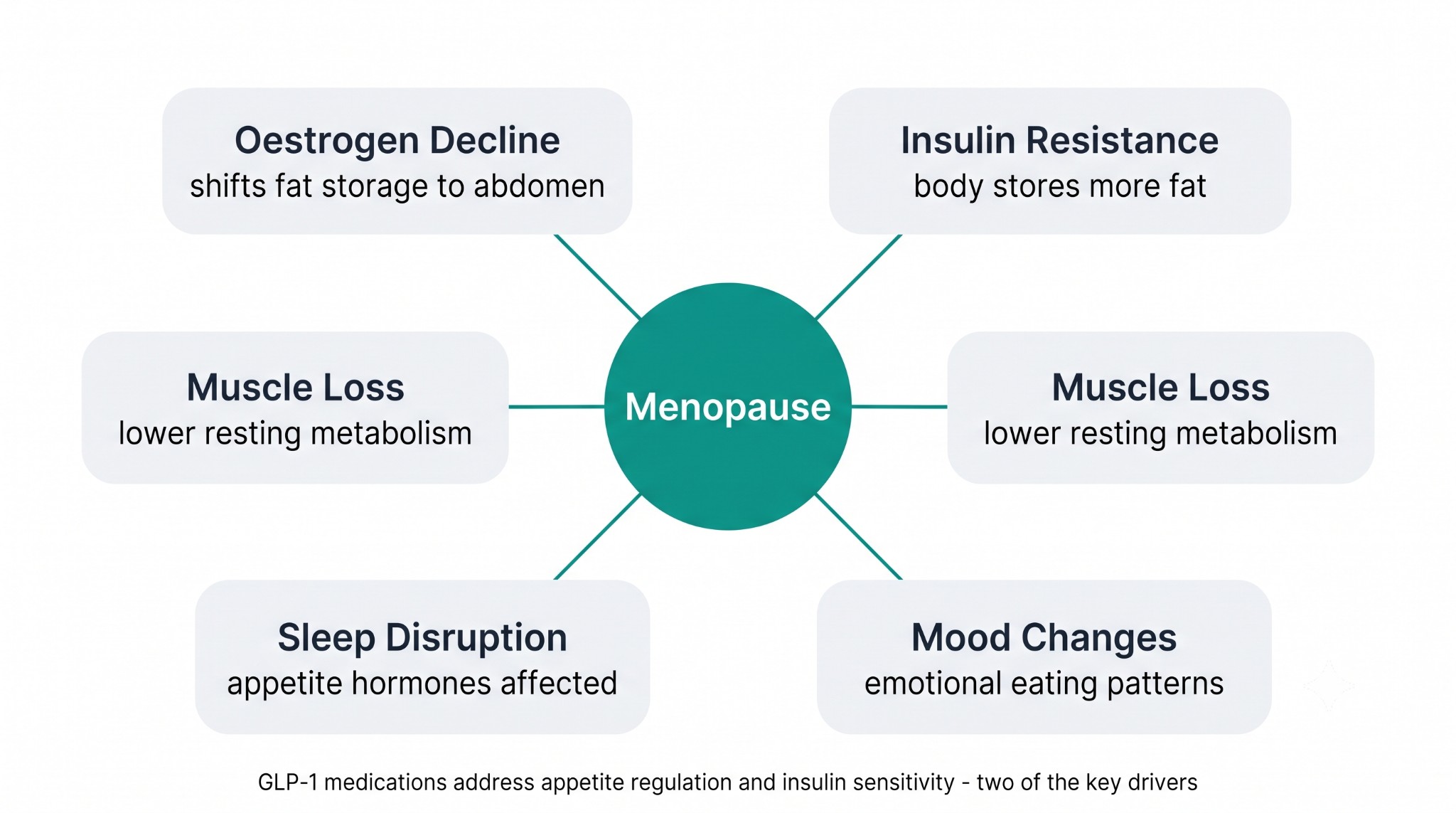
Oestrogen decline changes where fat is stored: Before menopause, oestrogen encourages fat storage around the hips and thighs (subcutaneous fat). As oestrogen drops during perimenopause and menopause, fat storage shifts toward the abdomen (visceral fat). This is not cosmetic - visceral fat is metabolically active and is associated with increased risk of type 2 diabetes, cardiovascular disease, and inflammation.
Insulin sensitivity decreases: Falling oestrogen levels are linked to reduced insulin sensitivity. Your body becomes less efficient at using glucose for energy and more inclined to store it as fat. This creates a pattern similar to what is seen in PCOS - weight gain driven by insulin resistance rather than overeating.
Muscle mass declines: From around age 30, everyone gradually loses muscle mass. But the hormonal changes of menopause can accelerate this. Less muscle means a lower resting metabolic rate, which means you burn fewer calories at rest. The same diet that maintained your weight at 40 may cause weight gain at 50.
Sleep disruption affects appetite hormones: Night sweats, hot flushes, and general sleep disturbance are common during perimenopause. Poor sleep increases ghrelin (the hunger hormone) and decreases leptin (the satiety hormone). You wake up hungrier, with more cravings, and less ability to resist them. This is not a character flaw. It is physiology.
Mood and stress changes affect eating patterns: Anxiety, low mood, and irritability - common during the menopausal transition - can drive emotional eating and reduce motivation for exercise. Again, this is hormonal, not personal.
Why Traditional Approaches Fall Short
The standard advice for menopausal weight gain - eat less, exercise more, try harder - misses the point. When your hormones are working against you, willpower is not a sufficient response.
Calorie restriction often backfires during menopause because the body's metabolic defence mechanisms are already heightened. Your metabolism is already slowing. Severe calorie cutting can make it slow further, creating a cycle of restriction, frustration, and regain that many women know all too well.
This is not to say that diet and exercise do not matter. They do. But for many women in menopause, lifestyle changes alone are not enough to overcome the hormonal headwinds. This is where medical treatment can make a meaningful difference.
For more on why conventional dieting fails, see our post on the science of metabolic weight loss.
What GLP-1 Medications Offer Menopausal Women
Mounjaro (tirzepatide) and Wegovy (semaglutide) were not developed specifically for menopause. They are licensed for weight management in adults who meet BMI criteria. But their mechanism of action addresses several of the specific challenges menopausal women face:
Appetite regulation: GLP-1 medications reduce hunger and quiet the "food noise" that hormonal disruption amplifies. For women dealing with sleep-related cravings or stress eating, this can be transformative.
Improved insulin sensitivity: Both medications improve how the body handles glucose and insulin. For women whose menopausal weight gain is driven by insulin resistance, this targets a root cause rather than a symptom.
Visceral fat reduction: Clinical trials have shown that GLP-1 medications reduce waist circumference significantly. The SURMOUNT-5 trial showed an average waist reduction of 18.4cm with tirzepatide over 72 weeks. This is important because visceral fat carries the highest metabolic risk.
Cardiovascular protection: The SELECT trial showed that semaglutide reduced the risk of major cardiovascular events by 20% in patients with obesity. Given that cardiovascular risk increases after menopause, this additional benefit is clinically relevant.
It is worth saying clearly: these medications are not a menopause treatment. They do not replace HRT or address hot flushes, mood changes, or bone density. But for women in menopause who are struggling with weight that will not shift, they offer a tool that works with their changed biology rather than against it.
Who Qualifies
The eligibility criteria are the same for all patients, regardless of menopausal status:
- A BMI of 30 or above, or
- A BMI of 27 or above with at least one weight-related health condition
Many of the qualifying comorbidities are conditions that become more common during and after menopause: high blood pressure, high cholesterol, prediabetes, type 2 diabetes, and obstructive sleep apnoea.
If you are in perimenopause or menopause, have a BMI of 27 or above, and have any of these conditions, you may well meet the clinical criteria.
For full details, see our guides to Mounjaro eligibility and Wegovy eligibility in Ireland.
Curious whether you qualify? Our doctors assess your full health profile, including hormonal and metabolic factors. Check your eligibility in under 4 minutes.
What to Discuss with Your Doctor
If you are considering GLP-1 treatment during menopause, there are a few things worth raising:
HRT and GLP-1 together: If you are on or considering hormone replacement therapy, this does not prevent you from using Mounjaro or Wegovy. The two work through different mechanisms and can be used alongside each other. However, your doctor should review your full medication list during your assessment.
Bone health: Significant weight loss at any age can affect bone density, and menopausal women are already at increased risk of osteoporosis. If you are on treatment, maintaining adequate calcium and vitamin D intake, along with weight-bearing exercise, becomes especially important.
Muscle preservation: The age-related muscle loss that menopause accelerates makes protein intake and resistance training even more important during GLP-1 treatment than it is for younger patients. If you are working with a Bua dietitian, this will be a priority in your nutritional plan.
Mental health: If menopause has affected your mood or anxiety levels, your doctor should be aware of this. Weight loss can improve mood for many women, but the adjustment period of starting a new medication while already managing hormonal changes is something your clinical team should support you through.
This Is Not About Willpower
If you are a woman in your 40s or 50s who has been fighting a body that no longer responds the way it used to, you are not lazy, undisciplined, or doing anything wrong. Your hormones have changed the game, and the old playbook does not work anymore.
Medical weight management is not a shortcut. It is an acknowledgement that biology matters, and that sometimes biology needs medical support. The women who do best on these treatments are the ones who combine medication with the kind of dietary and lifestyle changes that sustain results long-term - which is exactly what our programme is designed to support.
Treatment is always subject to clinical assessment by an IMC-registered doctor. Not everyone will be eligible, and a prescription is never guaranteed. If you are not suitable, you receive a full refund.
Related Reading
- Am I eligible for Mounjaro in Ireland?
- Do I qualify for Wegovy in Ireland?
- Why "eat less, move more" has failed you
- Medical weight management in Ireland: who is it actually for?
- Wegovy vs Mounjaro in Ireland: which is right for you?
- PCOS and Weight Loss in Ireland: Can GLP-1 Medications Help?
- The Protein Priority: How to Protect Muscle While You Lose Fat
References
- Davis, S. R., et al. Understanding Weight Gain at Menopause. Climacteric. 2012;15(5):419-429.
- Jastreboff, A. M., et al. Tirzepatide Once Weekly for the Treatment of Obesity (SURMOUNT-1). NEJM. 2022;387(3):205-216.
- Lincoff, A. M., et al. Semaglutide and Cardiovascular Outcomes in Obesity without Diabetes (SELECT). NEJM. 2023;389(24):2221-2232.
- European Medicines Agency. Mounjaro: Summary of Product Characteristics.
- European Medicines Agency. Wegovy: Summary of Product Characteristics.
Related Blogs
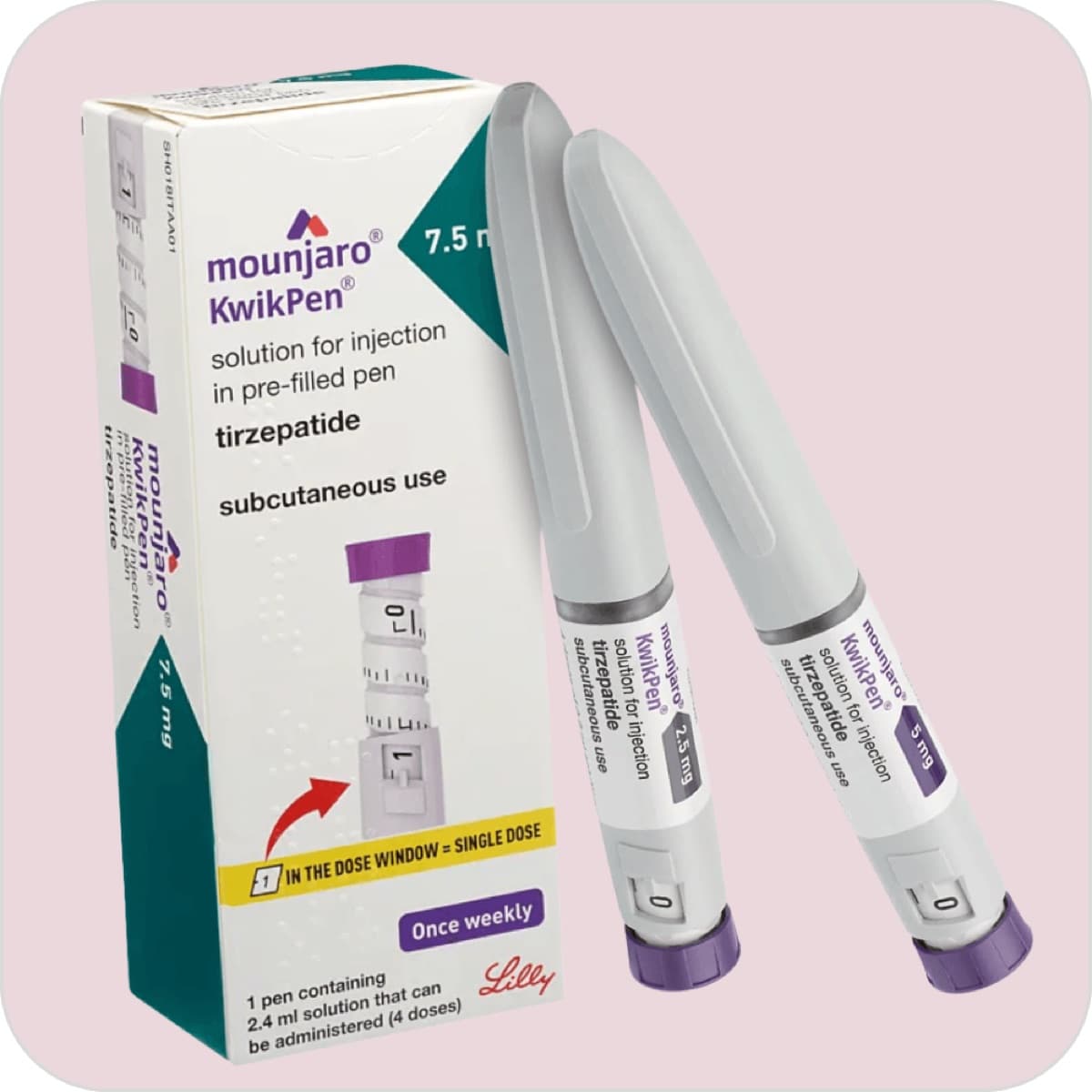
Who Qualifies for Mounjaro in Ireland?
An overview of the clinical criteria, safety checks, and medical assessment process doctors use to decide who is eligible for Mounjaro® (tirzepatide) in Ireland.
Read
What weight loss injections are available in Ireland?
A clear breakdown of the three main medical treatments for weight management in Ireland in 2025 and 2026
Read
Who can't take Mounjaro? Understanding the contraindications
A comprehensive guide to the absolute contraindications and other cautions that determine who cannot safely take Mounjaro® (tirzepatide) in Ireland.
ReadWho Qualifies for Mounjaro in Ireland?
An overview of the clinical criteria, safety checks, and medical assessment process doctors use to decide who is eligible for Mounjaro® (tirzepatide) in Ireland.
What weight loss injections are available in Ireland?
A clear breakdown of the three main medical treatments for weight management in Ireland in 2025 and 2026
Who can't take Mounjaro? Understanding the contraindications
A comprehensive guide to the absolute contraindications and other cautions that determine who cannot safely take Mounjaro® (tirzepatide) in Ireland.