



14 Jul 2026
Your First Month on Mounjaro: What to Expect Week by Week
All medical information is reviewed by our clinical partners at MedicOnline.

Dr. Jahan Khan, CMO @ MedicOnline
IMC 409788
You have been assessed, you have spoken to your doctor, your prescription has been dispensed, and you are holding a Mounjaro pen for the first time. Now what?
The first month on Mounjaro is all about adjustment. Your body is meeting a new medication, your appetite is starting to shift, and you are figuring out a new routine. It can feel like a lot of change at once.
This guide walks through what most patients experience in the first four weeks, based on the clinical evidence and the patterns our clinical team sees regularly. Everyone responds differently, so your experience may not match every detail here. But knowing the general shape of the first month makes the whole thing feel less uncertain.
If you have not yet been assessed for eligibility, our guide to Mounjaro eligibility in Ireland explains the clinical criteria. A prescription is only issued after a full medical review by an IMC-registered doctor, and not everyone will be suitable for treatment.
Before You Start: Getting Set Up
A few practical things to sort before your first injection.
Storage. Keep your Mounjaro pen in the fridge (2-8 degrees C) until you are ready to use it. Do not freeze it. Take it out of the fridge about 30 minutes before injecting to let it come to room temperature - a cold injection can sting more than it needs to.
Pick your injection day. You will inject once a week, on the same day each week. Many patients choose a Friday evening so that if they feel any nausea, the worst of it falls over the weekend. Others prefer a weekday morning so it becomes part of their routine. There is no medically correct answer - pick whatever fits your life.
Injection sites. You can inject into your abdomen (at least 5cm from your belly button), your upper thigh, or the back of your upper arm (if someone can help). Rotate the area each week to reduce the chance of skin irritation.
Have easy food ready. Stock your fridge with bland, easy-to-digest options for the first couple of days after your injection. Crackers, toast, yoghurt, soup, rice, bananas. You may not need them, but having them there takes the stress out of it if your stomach feels unsettled.
Week 1: The Starting Line
Dose: 2.5mg (starting dose)
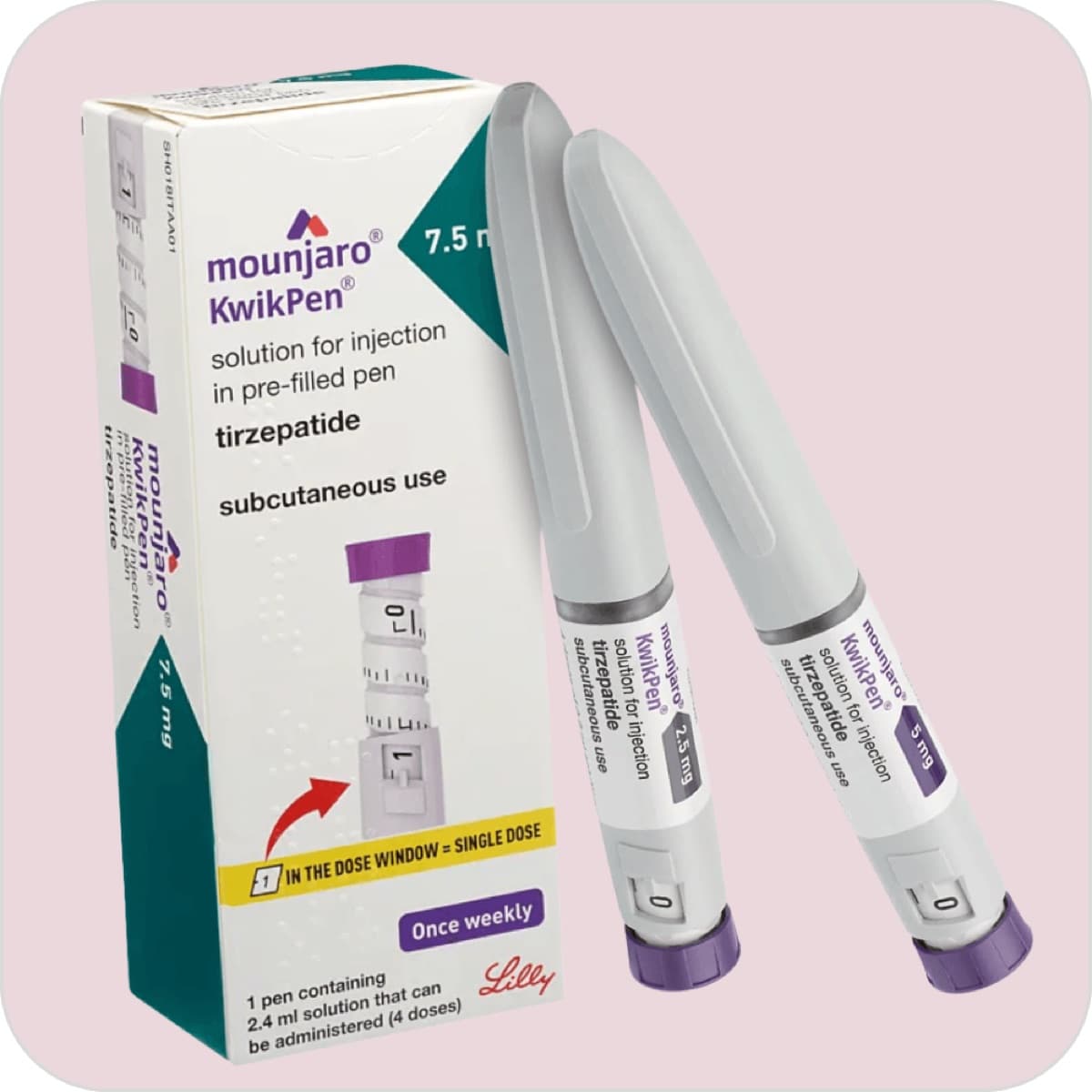
The first injection is almost always anticlimactic. Most patients build it up in their heads and then find it takes about five seconds and feels like a brief pinch, if they feel it at all. The KwikPen does the work for you - you press it against your skin, hold the button, and it is done.
In the hours and days after your first injection, you might notice very little. The 2.5mg starting dose is deliberately low. It is designed to let your body adjust gradually rather than hitting you with the full therapeutic dose from day one.
What some patients notice in week 1:
- A slight reduction in appetite, sometimes described as just not thinking about food as much as usual
- Mild nausea, usually passing quickly. Some people feel nothing at all
- A subtle sense of fullness after smaller portions than normal
- No dramatic changes for many people - and that is completely fine
If you feel no different in week 1, that does not mean the medication is not working. It means your body is adjusting at its own pace.
Practical tip: Start paying attention to your protein intake from day one. Even though appetite changes may be mild this early, building the habit of prioritising protein at every meal will matter more as your appetite decreases in the coming weeks. Eggs for breakfast, chicken or fish with lunch, Greek yoghurt as a snack. For more on why this matters, see our guide to protecting muscle with protein while you lose fat.
Week 2: Settling In
Dose: still 2.5mg
By the second injection, you know what to expect physically. The novelty has worn off and it starts to feel like a routine.
Most patients report that week 2 is when they first properly notice the appetite changes. Not a dramatic switch, but a quieter version of hunger. Meals feel more satisfying. Snacking between meals drops off naturally. Some people describe it as the "food noise" getting turned down - those constant background thoughts about what to eat next start to fade.
Side effects at this stage are usually minimal. If nausea appeared in week 1, it has typically settled. Some patients notice mild constipation starting, which is a common pattern that can persist for a few weeks.
Practical tip: Drink more water than you think you need. Aim for 1.5 to 2 litres a day. Between reduced food intake and the medication slowing your digestion, constipation is easier to prevent than to fix. Porridge in the morning and a daily walk both help keep things moving.
Week 3: Finding Your Rhythm
Dose: still 2.5mg
By week 3, the initial adjustment period is usually over. Most patients have settled into a pattern - they know when they feel best after injecting, they have figured out which foods sit well and which do not, and the daily routine of eating less feels more normal than novel.
This is often the week where patients start to see early changes on the scale, though it is important not to fixate on numbers this early. Weight loss in the first few weeks can be influenced by water, food volume, and digestive changes as much as actual fat loss. The meaningful, sustained progress comes over months, not weeks.
Some patients report feeling more energetic by week 3 as their body adapts. Others still feel a little tired, particularly if they have cut their food intake significantly. If fatigue is persistent, it is worth checking that you are eating enough - severely restricting calories on top of the medication is counterproductive and can leave you feeling drained.
Practical tip: If you are on the Bua programme, this is a good time to connect with the dietitian if you have not already. The first few weeks throw up practical questions about meal planning, portion sizes, and how to eat well on a reduced appetite. Getting guidance early makes the rest of the journey smoother.
Week 4: Looking Ahead
Dose: last week of 2.5mg before potential increase to 5mg
Week 4 is the final week on your starting dose. Your doctor will review your progress and, if you are tolerating the medication well, move you up to 5mg at your next injection.
By now, most patients have a clear sense of how Mounjaro affects them. Appetite is reduced. Portion sizes are smaller. The constant pull toward snacking or overeating has eased. Some patients have lost a few kilograms; others have not seen much scale movement yet. Both are normal.
What to expect with the dose increase to 5mg: a brief return of some of the early side effects is possible, particularly nausea. It usually follows the same pattern as week 1 - mild, short-lived, and manageable with the same strategies (small meals, bland food, steady hydration). Many patients find the 5mg adjustment easier than the initial start because their body has already partially adapted to tirzepatide's mechanism.
If your side effects on 2.5mg were significant, your doctor may decide to keep you on the starting dose for an additional period before increasing. There is no rush. The titration schedule exists to keep things comfortable, and your clinical team will move at the pace that works for you.
For a broader overview of all three licensed weight loss treatments in Ireland, see our guide to what weight loss injections are available in Ireland. For a detailed look at side effects across all dose levels, see Mounjaro side effects in Ireland: what to expect and how to manage them.
What Most People Get Wrong About the First Month
Expecting dramatic results immediately. The first month is foundation-building. The big weight loss numbers from the clinical trials happened over 68 to 72 weeks, not 4. Some patients lose 2-3kg in the first month; others lose very little. Both can go on to have excellent long-term outcomes.
Eating too little. When your appetite drops, it is tempting to just eat as little as possible. This backfires. Your body needs adequate protein and nutrition to lose fat while preserving muscle. Eating too little leads to fatigue, muscle loss, and a metabolism that slows down faster than it should. Eat less, yes. But eat well.
Not drinking enough water. This comes up again and again. Dehydration makes nausea worse, makes constipation worse, and makes fatigue worse. Two litres a day. It does not need to be complicated.
Comparing yourself to others. Your neighbour, your colleague, the person in the online forum - their first month will be different to yours. Different starting weight, different metabolism, different medication response. The only comparison that matters is you at week 1 versus you at month 3, month 6, month 12.
When to Contact Your Doctor
Most of what happens in the first month is normal and expected. But get in touch with your clinical team if:
- Nausea or vomiting is severe enough that you cannot eat or drink for more than 24 hours
- You experience severe stomach pain, especially if it spreads to your back
- You feel faint, dizzy, or confused
- You have persistent diarrhoea that is not improving after a few days
- Anything feels significantly wrong or different to what you expected
At Bua, our clinical team is available through our secure messaging platform. You do not need to wait for a scheduled appointment to ask a question or flag a concern. That is what ongoing support looks like.
If you have not yet started your assessment, you can check your eligibility online in under 4 minutes. An IMC-registered doctor will review your full medical history and determine whether Mounjaro is safe and appropriate for you. Not everyone will be eligible, and a prescription is never guaranteed.
Related Reading
- Am I eligible for Mounjaro in Ireland?
- Can I still have a drink? Alcohol and medical weight loss explained
- Can my GP prescribe Mounjaro?
- Who can't take Mounjaro? Understanding the contraindications
- Why medication alone isn't a silver bullet
- Mounjaro Side Effects in Ireland: What to Expect and How to Manage Them
References
- Jastreboff, A. M., et al. (2022). Tirzepatide Once Weekly for the Treatment of Obesity (SURMOUNT-1). New England Journal of Medicine, 387(3), 205-216.
- European Medicines Agency (EMA). Mounjaro (Tirzepatide): EPAR.
- Eli Lilly and Company. Mounjaro KwikPen Patient Information Leaflet.
Related Blogs
Who Qualifies for Mounjaro in Ireland?
An overview of the clinical criteria, safety checks, and medical assessment process doctors use to decide who is eligible for Mounjaro® (tirzepatide) in Ireland.
Read
What weight loss injections are available in Ireland?
A clear breakdown of the three main medical treatments for weight management in Ireland in 2025 and 2026
Read
Who can't take Mounjaro? Understanding the contraindications
A comprehensive guide to the absolute contraindications and other cautions that determine who cannot safely take Mounjaro® (tirzepatide) in Ireland.
ReadWho Qualifies for Mounjaro in Ireland?
An overview of the clinical criteria, safety checks, and medical assessment process doctors use to decide who is eligible for Mounjaro® (tirzepatide) in Ireland.
What weight loss injections are available in Ireland?
A clear breakdown of the three main medical treatments for weight management in Ireland in 2025 and 2026
Who can't take Mounjaro? Understanding the contraindications
A comprehensive guide to the absolute contraindications and other cautions that determine who cannot safely take Mounjaro® (tirzepatide) in Ireland.